
A beautiful shower can be the centerpiece of a bathroom, but the effort required to keep its walls sparkling can be a major deterrent. Thankfully, innovations in materials and smart maintenance strategies can transform your shower cleaning routine from a chore into a breeze. Quality Cleaning Services understands the value of an easy-to-maintain home and offers insights and services to keep your shower walls effortlessly clean.
Designing or maintaining a shower with easy-to-clean walls can dramatically cut down on bathroom chores. It’s all about choosing the right materials and adopting smart habits.
What makes a shower wall easy to clean
The ease of cleaning a shower wall largely depends on its surface properties and design. Here are the key factors:
- Non-Porous Surface: The less porous a material, the less it will absorb water, soap scum, and other residues. Non-porous surfaces prevent mold and mildew from penetrating and staining.
- Minimal Grout Lines: Grout is inherently porous and rough, making it a magnet for dirt, soap scum, and mold. Materials with fewer, thinner, or no grout lines are significantly easier to clean.
- Smooth Texture: A smooth, continuous surface doesn’t have crevices or textures where grime can accumulate. Textured tiles, while attractive, can trap more dirt.
- Durability & Chemical Resistance: Easy-to-clean materials should be durable enough to withstand regular cleaning without etching, dulling, or discoloring when exposed to common bathroom cleaning products.
- Vertical Surfaces: Gravity helps! Vertical walls allow water to run down, minimizing standing water compared to horizontal surfaces like shower floors, though residue can still cling.
- Proper Installation: A correctly installed shower, with proper sealing and drainage, prevents water from getting behind walls or pooling, which is crucial for preventing hidden mold.
Best materials for low-maintenance shower walls
When selecting materials for your shower walls, prioritize those known for their ease of cleaning and minimal maintenance requirements.
- Large-Format Porcelain or Ceramic Tiles:
- Why they’re great: While still requiring grout, using large tiles (e.g., 12×24 inches or larger) drastically reduces the number of grout lines compared to mosaic or standard 4×4 tiles. Porcelain is highly non-porous and incredibly durable.
- Maintenance: Easy to wipe down, resistant to most cleaners. Focus on keeping the few grout lines clean and sealed.
- Solid Surface Panels (e.g., Corian, Swanstone, cultured marble):
- Why they’re great: These are seamless or have very few, barely visible seams, eliminating grout almost entirely. They are non-porous, resistant to mold, mildew, and common stains.
- Maintenance: Simply wipe down with a non-abrasive cleaner and a soft cloth. Very low maintenance.
- Acrylic or Fiberglass Panels:
- Why they’re great: Often come as pre-fabricated, one-piece units or large panels with very few seams. They are non-porous, smooth, and relatively inexpensive.
- Maintenance: Very easy to wipe clean with mild soap and water or non-abrasive cleaners. Can be prone to scratching if abrasive tools are used.
- Natural Stone Slabs (e.g., Granite, Marble, Quartzite):
- Why they’re great: Provide a luxurious, seamless look with virtually no grout lines. They are incredibly durable and visually stunning.
- Maintenance: Requires sealing periodically (especially marble) to maintain non-porosity. Once sealed, they are relatively easy to wipe down, but avoid acidic or abrasive cleaners that can etch the stone.
- Glass Panels (as part of a wall system):
- Why they’re great: Similar to glass shower doors, full glass panels used as wall sections offer a sleek, seamless, and completely non-porous surface.
- Maintenance: Prone to water spots and soap scum like shower doors, so daily squeegeeing is essential. Can be treated with water-repellent coatings.
- Laminate Panels (High-Pressure Laminate specifically for wet areas):
- Why they’re great: Designed to mimic various materials, they offer a smooth, non-porous, and grout-free surface. They are durable and often more affordable than solid surfaces.
- Maintenance: Easy to wipe clean with mild solutions. Check manufacturer guidelines for specific cleaning product compatibility.
Daily and weekly cleaning recommendations
Consistent, light cleaning is far more effective than infrequent, heavy scrubbing.
Daily maintenance (after each shower)
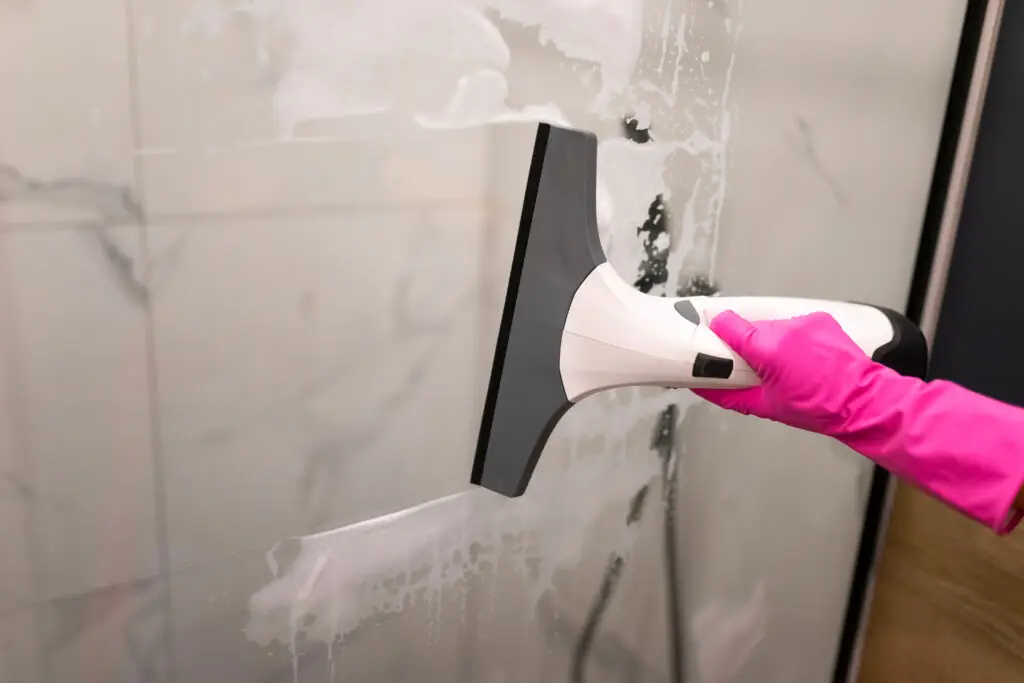
- Squeegee: Use a rubber squeegee on all smooth surfaces (glass, large tiles, solid panels) after every shower. This removes water and soap residue before it dries and hardens.
- Wipe Down: Quickly wipe down the walls, fixtures, and any ledges with a clean, dry microfiber cloth. This absorbs remaining moisture and airborne particles.
- Run Exhaust Fan: Always turn on the bathroom exhaust fan during and for at least 15-20 minutes after showering to remove humidity and dry out surfaces.
- Air Dry: Leave the shower door or curtain ajar to allow air circulation and promote drying inside the shower.
Weekly cleaning (or Bi-Weekly, based on usage)
- Spray and Wipe: Spray down all shower wall surfaces with a daily shower cleaner, a dilute white vinegar solution (1 part vinegar to 1 part water), or a mild dish soap solution (a few drops in a spray bottle of water).
- Gentle Scrub (if needed): Use a soft sponge or microfiber cloth to gently wipe or scrub the walls, focusing on any areas with visible soap scum or light buildup. For grout, use a soft grout brush.
- Rinse Thoroughly: Rinse all surfaces thoroughly with clean water, ensuring no cleaner residue is left behind.
- Dry Completely: Use a clean, dry towel or squeegee to dry all surfaces to prevent water spots and mildew.
Preventing mold, soap scum, and hard water stains
Prevention is always easier than remediation. These strategies directly target the common culprits of shower wall grime.
- Ventilation is Key: As mentioned, robust ventilation (exhaust fan, open window/door) is paramount. High humidity is the root cause of most bathroom problems.
- Wipe Down After Use: This is the golden rule. Removing water before it dries prevents soap scum and hard water minerals from hardening onto surfaces.
- Use Liquid Body Wash vs. Bar Soap: Bar soap leaves behind more sticky soap scum residue. Liquid body wash creates less residue, which is easier to rinse away.
- Install a Water Softener (for Hard Water): If you live in an area with hard water, a whole-house water softener can significantly reduce mineral deposits on all bathroom surfaces, including shower walls.
- Consider Water-Repellent Coatings: For glass and some tiled surfaces, applying a long-lasting water-repellent coating can make water bead up and roll off, reducing spotting and scum buildup.
- Regular Cleaning with Appropriate Products: Don’t let grime accumulate. Stick to your weekly cleaning schedule using cleaners that target soap scum and hard water (e.g., vinegar-based cleaners) to prevent them from becoming set-in stains.
- Address Leaks Promptly: Fix any leaky showerheads, faucets, or plumbing issues immediately, as constant drips provide moisture for mold and hard water stains.
Long-term care tips for lasting results
Beyond routine cleaning, these long-term strategies ensure your easy-clean shower walls truly stand the test of time.
- Know Your Material’s Specific Needs: While generally low-maintenance, each material has nuances. For example, natural stone slabs require periodic sealing, and acrylic can scratch more easily than porcelain. Consult manufacturer guidelines for any specific care instructions.
- Re-Seal Grout (for tiled showers): Even with large tiles, grout still needs attention. If your shower has grout lines, test their seal regularly (drop a few water beads; if they soak in, it’s time to re-seal). Re-seal typically every 1-5 years with a penetrating grout sealer to keep it non-porous and stain-resistant.
- Avoid Harsh Abrasives & Chemicals: Regardless of the material, consistently using abrasive scrubbers (steel wool, harsh powders) or strong, etching chemicals (e.g., concentrated bleach on natural stone, highly acidic cleaners on acrylic) can dull finishes, remove coatings, or damage surfaces over time. Stick to gentle, pH-neutral cleaners or those specifically recommended for your material.
- Check Caulking/Sealant: Inspect the caulking around the shower base, corners, and where panels meet the wall periodically. If you see cracking, peeling, or signs of mold underneath, re-caulk. Fresh, clean caulk forms a waterproof barrier and looks better.
- Address Hidden Moisture: If you notice persistent musty smells, peeling paint on adjacent walls, or water stains on the ceiling below the bathroom, it could indicate a hidden leak. Address these immediately, as they can lead to significant mold growth behind walls.
- Professional Cleaning: Even the easiest-to-clean showers benefit from occasional professional cleaning, especially if hard water or mold become a persistent issue. Quality Cleaning Services can provide deep cleaning that tackles buildup without damaging surfaces, and offers advice on long-term prevention specific to your shower’s materials and usage.
Investing in easy-to-clean shower walls pays off with less time spent scrubbing and more time enjoying a sparkling bathroom. With diligent daily habits and thoughtful long-term care, your shower can remain a beautiful, low-maintenance feature for years. For comprehensive bathroom cleaning solutions, trust Quality Cleaning Services to keep every corner of your home pristine.
