
Pet accidents on the carpet are a common challenge for homeowners. While the visible stain might be easy to clean, the lingering urine smell can be notoriously difficult to eliminate. This persistent odor is caused by uric acid crystals that remain in the carpet fibers and padding, becoming more pungent over time. Tackling urine smell effectively requires more than just masking it; it demands a deep-cleaning approach to neutralize the odor at its source.
Identifying fresh vs. Old stains
The success of urine odor removal largely depends on how quickly you address the accident and whether the stain is fresh or has had time to set.
- Fresh Stains (Wet or Recently Dried):
- Characteristics: The area is still damp, or has just dried. The odor might be noticeable but not overwhelming.
- Why it matters: Fresh urine has not yet fully crystallized. This means it’s easier to absorb and treat, significantly increasing your chances of complete odor removal with DIY methods.
- Action: Immediate and thorough blotting is crucial to remove as much liquid as possible before it sets.
- Old Stains (Set-in or Recurring):
- Characteristics: The area might appear dry, but the odor is strong, especially in humid conditions. You might notice discoloration or a sticky residue. Often, pets return to the same spot.
- Why it matters: Over time, the uric acid in urine dries and forms stubborn crystals that bind to carpet fibers. These crystals are highly resistant to traditional cleaning methods and reactivate with moisture, releasing a strong, unpleasant odor.
- Action: Old stains typically require more aggressive treatment, often involving enzyme cleaners, and may ultimately need professional intervention to fully break down the embedded crystals.
Enzyme treatments vs. DIY solutions
Once the initial blotting is done, choosing the right cleaning agent is critical for neutralizing the urine odor.
- Enzyme Treatments: The Gold Standard for Pet Urine
- What they are: Specialized cleaners containing beneficial bacteria that produce enzymes. These enzymes are specifically designed to break down organic matter, including the uric acid crystals in pet urine.
- Why they work: Enzyme cleaners don’t just mask the odor; they eliminate it at the molecular level by dissolving the uric acid. This is crucial for preventing pets from re-soiling the same spot, as their powerful sense of smell will no longer detect their scent markers.
- How to use: After blotting up as much urine as possible, saturate the affected area (and the padding beneath) with the enzyme cleaner. Follow the product’s instructions for dwell time (how long it needs to sit) and drying. It’s vital to allow the cleaner to air dry completely for the enzymes to do their work.
- Benefits: Most effective for complete odor elimination, especially for pet urine. Safe for most carpets when used as directed.
- DIY Solutions: Effective for Fresh Stains & General Odors
- White Vinegar Solution:
- Why it works: White vinegar is a mild acid that helps neutralize the alkaline salts in urine and acts as a natural deodorizer.
- How to use: Mix equal parts distilled white vinegar and warm water in a spray bottle. After blotting the urine, lightly spray the area with this solution. Let it sit for 5-10 minutes, then blot thoroughly with a clean, dry, white cloth.
- Benefits: Good for neutralizing some odors and breaking down fresh stains. Non-toxic and readily available.
- Baking Soda:
- Why it works: Baking soda is a natural absorbent and powerful deodorizer. It can soak up residual moisture and neutralize odors.
- How to use: After treating with vinegar (or an enzyme cleaner that has dried), sprinkle a generous layer of baking soda over the affected area. Let it sit for several hours or even overnight to absorb any lingering moisture and odors. Once completely dry, vacuum the baking soda thoroughly.
- Benefits: Excellent for drawing out moisture and tackling persistent smells.
- White Vinegar Solution:
Saturation & drying techniques to stop rustle
Proper saturation of the stain and thorough drying are crucial steps that often determine the success of odor removal and prevent issues like stiffness or re-soiling.
- Saturate Appropriately: When applying your chosen cleaning solution (especially enzyme cleaners), ensure you saturate the area enough to reach the depth the urine has penetrated. For pet urine, this often means soaking not just the carpet fibers, but also the padding underneath. If the solution doesn’t reach all the urine, the odor will persist.
- Blot, Don’t Rub (Again!): After applying the solution and allowing it to dwell, blot the area with clean, dry, white towels. Apply firm pressure (you can stand on the towels) to absorb as much liquid as possible. Continue blotting until no more moisture transfers to the towel.
- Avoid Over-Wetting: While saturation is important, over-wetting the carpet can lead to new problems like mold, mildew, or damage to the carpet backing. Use enough solution to treat the stain, but not so much that the carpet is soaking wet.
- Maximize Air Circulation for Drying: This is critical. Once you’ve blotted, speed up the drying process to prevent mold and mildew.
- Fans: Position one or more fans directly on or near the treated area to create strong airflow.
- Open Windows: If weather permits, open windows in the room to allow for fresh air circulation and to help dissipate any remaining odors.
- Elevate Carpet (if possible): For very severe stains, carefully lifting a corner of the carpet to allow air to circulate underneath can aid drying.
- No Heat!: Never use heat (like a hair dryer, clothes iron, or steam cleaner) on a fresh or recently treated urine stain. Heat can permanently set the protein in the urine into the carpet fibers, making the stain and odor much harder, if not impossible, to remove.
- Prevent Rustle/Stiffness: If the carpet feels stiff or “crunchy” after drying, it’s often due to dried urine salts or cleaning solution residue. Thorough blotting and rinsing (if the product allows) are key. A final vacuuming after the carpet is completely dry can also help fluff the fibers. If stiffness persists, a professional cleaning might be needed to extract the residues.
When to use steam or extraction cleaning
While DIY methods are great for immediate action and minor issues, some urine stains and odors require the power and expertise of professional cleaning.
- Deep-Set Odors: If the odor persists after multiple attempts with enzyme cleaners and DIY solutions, it indicates that the uric acid crystals are deeply embedded in the carpet padding or even the subfloor. Household methods simply can’t reach this depth.
- Large or Multiple Accidents: Extensive or repeated accidents in the same area lead to a significant buildup of urine residue that only professional equipment can effectively remove.
- Visible Stains Remain: If a visible stain persists despite your best efforts, professional cleaning can often remove it.
- Wicking: If a stain appears to be gone but then reappears a few days later, it’s due to “wicking”—residual urine in the padding wicking back up as the carpet dries. Professionals ensure thorough extraction to prevent this.
- Health and Hygiene Concerns: For severe accidents, or if you’re concerned about bacteria, mold, or mildew growth deep within the carpet, professional hot water extraction (often referred to as “steam cleaning”) provides a thorough sanitization that DIY methods can’t match.
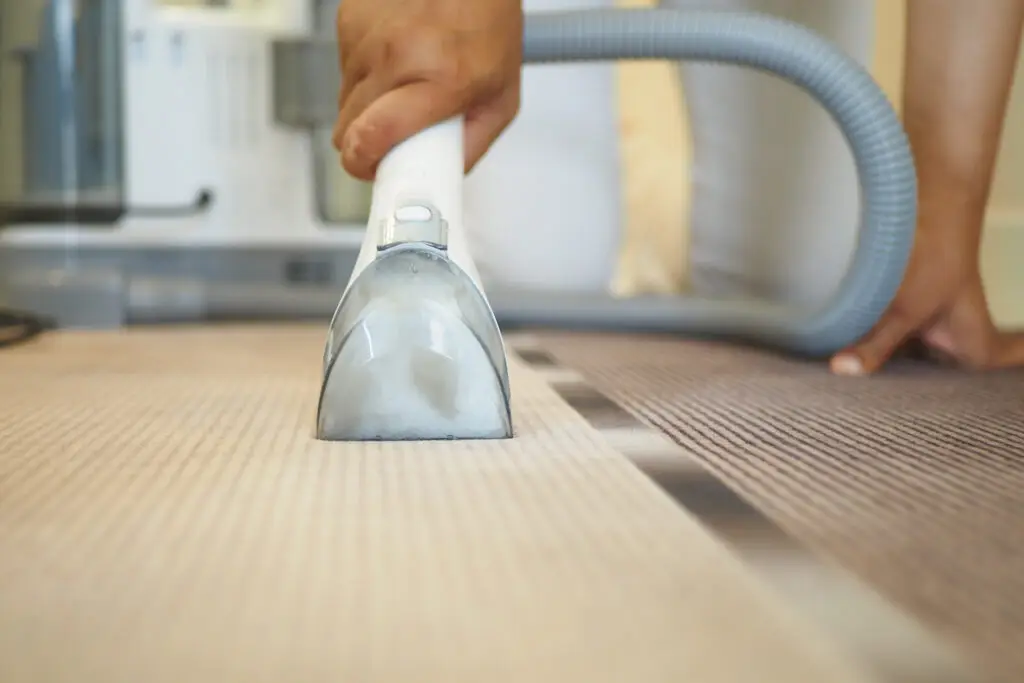
- Professional Equipment: Professional cleaners use powerful, truck-mounted or portable hot water extraction machines that inject a cleaning solution deep into the carpet and then immediately extract it, along with the dissolved urine, dirt, and allergens. This is far more effective than consumer-grade machines.
- Specialized Treatments: Professionals have access to commercial-grade enzyme treatments and deodorizers that are more potent and effective than consumer products, ensuring complete odor neutralization.
Prevention: Barriers, matting & pet behavior tips
Preventing future accidents is key to maintaining a fresh-smelling carpet.
- Waterproof Barriers: For pets or children prone to accidents, consider using waterproof mattress protectors or placing waterproof pads under rugs in high-risk areas.
- Strategic Matting: Place absorbent mats or rugs in high-traffic areas or near doors where accidents might occur. Ensure these mats are washable.
- Consistent Potty Training: Reinforce potty training with positive reinforcement. Take puppies out frequently, especially after waking up, eating, and playing.
- Supervision: Supervise young puppies or new pets closely, especially when they are off-leash indoors.
- Crate Training: Crate training can be an effective tool, as dogs are naturally reluctant to soil their sleeping area.
- Schedule: Establish a consistent feeding and potty break schedule.
- Clean Thoroughly: After an accident, clean the area meticulously. If the scent remains, your pet will be drawn back to that spot. Enzyme cleaners are crucial here.
- Veterinary Check-up: If an adult, previously house-trained pet suddenly starts having accidents, consult a veterinarian. It could be a sign of an underlying medical issue.
Don’t let pet accidents leave a lasting mark or odor in your home. By acting quickly, using the right cleaning agents, and ensuring thorough drying, you can often save your carpets. For those tough, set-in stains or persistent odors, remember that professional help is invaluable.
Ready to say goodbye to stubborn pet urine smells and enjoy a truly fresh home? Contact Quality Cleaning Services today for a free estimate on professional carpet deep cleaning and odor removal!
