
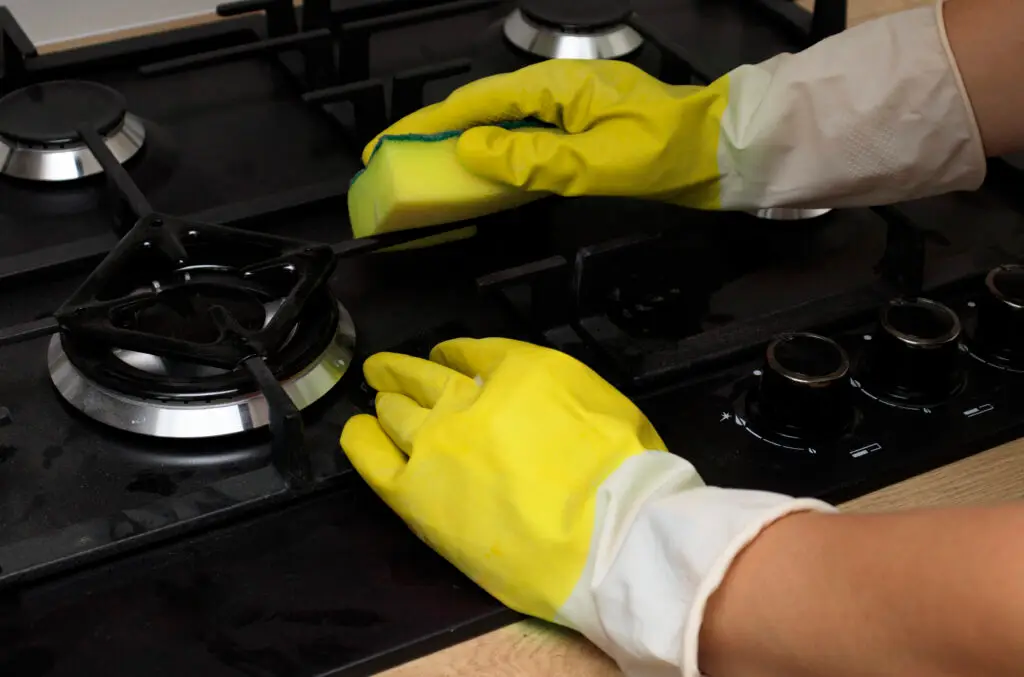
Ceramic glass stovetops are a sleek, modern addition to any kitchen. Their smooth, seamless surface is a stylish alternative to traditional coil burners, but they require a specific cleaning approach to maintain their pristine look. Unlike rough-and-tumble cast iron or stainless steel, ceramic glass is susceptible to scratches and damage from the wrong tools or cleaners. This guide will walk you through the best methods and products to keep your cooktop looking brand new.
Why Ceramic Stovetops Require Special Care
While ceramic glass is a durable material, it’s not indestructible. Its smooth surface, which makes it easy to wipe down, is also what makes it vulnerable to certain types of damage. Understanding the unique characteristics of this material is the first step to proper cleaning.
Avoiding scratches
The most common mistake people make is using abrasive cleaners or scouring pads. Products like steel wool, powdered cleansers, or even the rough side of a standard sponge can leave tiny, permanent scratches on the glass surface. Over time, these fine scratches can dull the finish and make the stovetop appear cloudy and worn.
Heat-resistant but delicate surface
Ceramic glass is designed to withstand extreme heat, but it is not immune to damage from sugar or plastic. If a spill containing sugar or a plastic container melts onto the surface, it can bond to the glass, potentially causing a pit or crack if not removed properly and promptly. Similarly, dragging heavy, un-smooth cookware across the surface can lead to scratching.
Best Products for Ceramic Stovetop Cleaning
For the best results, you should always use products specifically designed for ceramic cooktops. These are formulated to be non-abrasive while still being effective at cutting through grease and removing stains.
Non-abrasive cleaners
Specialized ceramic stovetop cleaners come in a cream or gel form. They work by dissolving grime without scratching the surface. Brands like Cerama Bryte, Weiman, and Affresh are widely available and trusted. Simply apply a small amount to the cooktop and use a soft cloth or a special stovetop pad to rub it in. Let the product sit for a few minutes, then wipe it clean with a damp cloth and buff with a dry one.
Scrapers for burned-on stains
For hardened, burned-on food spills that won’t come off with a cleaner, a scraper is the only safe and effective tool. These are small, razor-blade scrapers designed for cooktops. They are specifically angled to lift the burnt food without scratching the glass. You must hold the scraper at a shallow angle (almost flat) against the glass and gently push to lift the stain. This is the recommended method for removing tough stains like melted sugar.
DIY Cleaning Solutions
If you don’t have a specialized stovetop cleaner on hand, you can create effective cleaning solutions with common household products.
Baking soda paste
For general grime and minor spills, a baking soda paste works wonders.
- Recipe: Mix a small amount of baking soda with just enough water to create a thick paste.
- Application: Spread the paste over the stained areas of the cooled cooktop. Place a hot, damp towel over the paste and let it sit for about 15-30 minutes. The moisture and heat will help soften the grime. Use a soft cloth to gently scrub the surface and then wipe clean.
Vinegar and soap mix
This solution is excellent for a quick daily cleaning to remove splatters and light grease.
- Recipe: Mix equal parts white vinegar and water in a spray bottle with a few drops of dish soap.
- Application: Lightly spray the cooled cooktop and wipe it down with a microfiber cloth. The vinegar cuts through grease, and the soap helps lift any remaining residue.
Preventing Future Stains
The easiest way to keep your ceramic stovetop clean is to prevent stains from setting in.
Wipe spills immediately
As soon as a spill occurs—and once the surface is cool enough to touch—wipe it away with a damp cloth. A hot surface can cause sugar or plastic to melt into the glass, making it extremely difficult to remove.
Use stove-safe cookware
Use pots and pans with smooth, flat bottoms. Avoid using cookware with rough or warped bottoms, as they can cause uneven heating and scratch the surface. Cast iron cookware, while popular, should be used with caution as it is heavy and can easily scratch the glass if dragged.
FAQs
Can I use glass cleaner on a ceramic stovetop?
It’s not recommended. Most glass cleaners contain ammonia, which can react with the heat of the cooktop over time, leading to discoloration or a cloudy film. Additionally, they are not formulated to break down cooked-on food or grease, so they won’t be effective for deep cleaning. Always stick to products made for cooktops.
How do I remove stubborn burn marks?
For tough, burned-on stains, start with a baking soda paste. If the stain remains, use a specialized razor-blade scraper designed for ceramic cooktops. Hold the scraper at a very low angle to the glass and gently push it under the stain to lift it. Follow up with a dedicated ceramic stovetop cleaner to clean any remaining residue.
Tired of scrubbing? Let the professionals handle it. Contact Quality Cleaning Services today for a free estimate and let us make your entire kitchen sparkle.
