
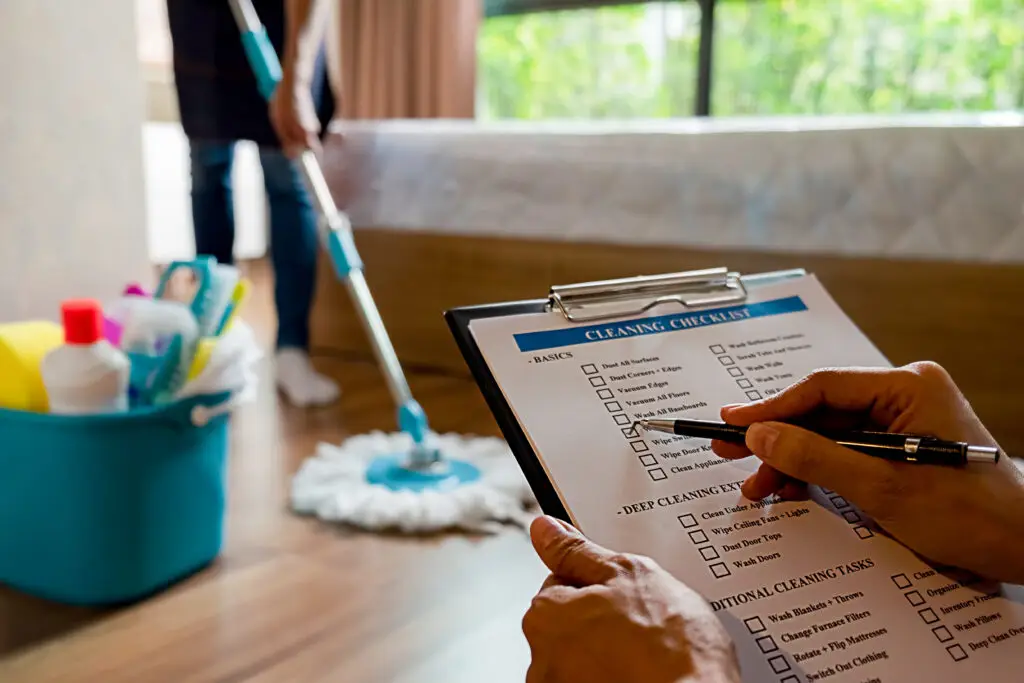
A clean bedroom helps you sleep better, reduce dust, and create a healthier environment. However, many homeowners clean only the visible areas and overlook places where dirt, allergens, and debris accumulate over time.
A bedroom cleaning checklist helps you follow a consistent process. As a result, cleaning becomes more efficient and no important area is forgotten. Whether you are maintaining your bedroom every week or completing a seasonal deep clean, a structured routine can save time and improve results.
Why a bedroom cleaning checklist matters
Your bedroom is one of the most frequently used rooms in your home. Every day, bedding, clothing, carpets, rugs, and upholstered furniture release tiny fibers into the air. At the same time, dust, pollen, pet dander, and other particles settle on surfaces throughout the room.
Without a routine, these particles continue to build up.
A bedroom cleaning checklist helps prevent that buildup. Instead of cleaning only visible surfaces, you clean the areas where dust and allergens are most likely to collect.
Professional cleaners frequently find significant dust accumulation in:
- Under beds
- Behind dressers
- Along baseboards
- Behind headboards
- Inside closets
- On ceiling fan blades
Because these areas are often overlooked, they can affect the overall cleanliness of the room even when it appears tidy.
Following a bedroom cleaning checklist can also:
- Improve indoor air quality
- Reduce allergens
- Support better sleep
- Create a more organized environment
- Protect furniture and flooring
- Make future cleaning easier
Therefore, a bedroom cleaning checklist supports both comfort and cleanliness.
How often should you follow a bedroom cleaning checklist?
Most homeowners benefit from following a bedroom cleaning checklist every week.
Weekly cleaning should include:
- Dusting furniture
- Vacuuming floors
- Changing bed linens
- Emptying trash bins
- Wiping high-touch surfaces
Monthly cleaning should include:
- Cleaning baseboards
- Dusting ceiling fans
- Organizing closets
- Vacuuming under furniture
- Washing curtains when needed
If you have pets or allergies, some tasks should be completed more frequently.
For example, professional cleaners often recommend vacuuming carpets and rugs several times per week in homes with pets. This helps reduce pet hair, dander, and dust buildup.
Bedroom cleaning checklist: Start with decluttering
Before cleaning any surface, remove unnecessary items from the room.
Clutter makes cleaning more difficult. In addition, it creates more places where dust can accumulate.
For this reason, decluttering should always be the first step in your bedroom cleaning checklist.
Start by removing:
- Clothes from the floor
- Shoes
- Empty bottles
- Books and magazines
- Laundry
- Unused electronics
Next, sort belongings into categories:
- Keep
- Donate
- Store
- Discard
As a result, the room becomes easier to clean and maintain.
Organize items by category
Many people move clutter from one area to another. However, this rarely solves the problem.
Instead, organize items according to how often they are used.
Store seasonal items separately. Keep daily essentials accessible. Donate items you no longer use.
Professional cleaners often notice that overcrowded closets and drawers make bedrooms harder to maintain. Therefore, organization should remain part of every bedroom cleaning checklist.
Common bedroom cleaning mistakes homeowners make
Many homeowners spend time cleaning their bedrooms but still miss important areas.
One common mistake is focusing only on visible surfaces.
For example, people often:
- Dust furniture but ignore ceiling fans
- Vacuum around furniture but not underneath it
- Change sheets but skip mattress care
- Organize shelves but overlook closet floors
Another common mistake is cleaning in the wrong order.
Professional cleaners typically clean from top to bottom. Dusting should happen before vacuuming. Otherwise, dust falls onto already cleaned surfaces.
In addition, using the same cloth throughout the room can spread dust instead of removing it.
A bedroom cleaning checklist helps eliminate these mistakes and creates a more efficient routine.
Make the bed first
Making the bed immediately improves the appearance of the room.
In addition, it creates a clean workspace for the rest of your bedroom cleaning checklist.
Start by:
- Straightening sheets
- Fluffing pillows
- Arranging blankets
- Replacing dirty pillowcases
- Inspecting bedding for wear
Experts generally recommend washing sheets and pillowcases every week.
Clean bedding helps reduce dust mites and improves comfort. As a result, it contributes to a healthier sleeping environment.
Dust all surfaces thoroughly
Dusting is one of the most important steps in a bedroom cleaning checklist.
Dust contains skin cells, fabric fibers, pollen, pet dander, and outdoor pollutants. Over time, these particles settle on furniture and other surfaces.
Start at the highest points in the room and work downward.
Dust:
- Shelves
- Headboards
- Dressers
- Nightstands
- Lamps
- Picture frames
- Window sills
This approach prevents dust from settling on surfaces that have already been cleaned.
Do not forget hidden dust collection areas
Many of the dirtiest areas are not immediately visible.
Be sure to clean:
- Ceiling fan blades
- Baseboards
- Under the bed
- Behind furniture
- Closet shelves
Professional cleaners frequently discover heavy dust accumulation in these locations during deep cleaning visits.
Therefore, these areas should always be included in your bedroom cleaning checklist.
Vacuum carpets, rugs, and floors
Vacuuming removes dust, hair, dirt, and allergens trapped in flooring materials.
A complete bedroom cleaning checklist should include:
- Carpets
- Area rugs
- Hardwood floors
- Laminate floors
- Closet floors
Move lightweight furniture whenever possible. This allows you to remove debris hidden underneath.
In homes with pets, vacuuming may be necessary multiple times per week.
Clean and maintain your mattress
Many homeowners forget that mattresses require regular cleaning.
However, a mattress collects dust, skin cells, sweat, and allergens over time.
As part of your bedroom cleaning checklist:
- Remove all bedding.
- Vacuum the mattress surface.
- Spot-clean stains if necessary.
- Allow the mattress to air out.
- Rotate the mattress according to manufacturer recommendations.
Professional cleaners often find that mattress maintenance is one of the most overlooked aspects of bedroom cleaning.
Wash fabrics and soft surfaces
Bedrooms contain many fabric surfaces that trap dust and odors.
A complete bedroom cleaning checklist should include:
- Sheets
- Pillowcases
- Comforters
- Mattress protectors
- Curtains
- Throw blankets
- Decorative pillows
Washing these items regularly helps improve indoor air quality and maintain a fresher environment.
Recommended cleaning frequency
A practical schedule includes:
- Sheets: weekly
- Pillowcases: weekly
- Comforters: every 2 to 3 months
- Curtains: every 3 to 6 months
- Mattress protectors: monthly
Following a schedule helps prevent dust and allergen buildup.
Improve indoor air quality while cleaning
A bedroom cleaning checklist can significantly improve indoor air quality.
According to the U.S. Environmental Protection Agency, reducing indoor pollutants helps create a healthier living environment.
Helpful habits include:
- Vacuuming regularly
- Washing bedding weekly
- Dusting frequently
- Reducing clutter
- Replacing HVAC filters
For more information, review the EPA Indoor Air Quality Guide.
If you need help maintaining a cleaner home, professional House Cleaning Services can help reduce dust accumulation throughout the property.
For bedrooms that have not received detailed attention in months, a professional Deep Cleaning Service can address buildup behind furniture, under beds, and in other hard-to-reach areas.
Homeowners looking for a more detailed cleaning routine can also benefit from a Deep Cleaning House Checklist to identify areas that require additional attention.
Create a weekly bedroom cleaning checklist
A weekly bedroom cleaning checklist helps prevent dirt and clutter from accumulating.
Weekly tasks should include:
- Make the bed daily
- Dust furniture
- Vacuum floors
- Change bedding
- Empty trash bins
- Wipe mirrors
- Organize surfaces
Because these tasks require little time, they are easier to maintain consistently.
Create a monthly bedroom cleaning checklist
Monthly cleaning focuses on areas that receive less attention during weekly maintenance.
Monthly tasks should include:
- Clean baseboards
- Wash curtains
- Vacuum under furniture
- Dust ceiling fans
- Organize closets
- Clean storage areas
These tasks help maintain long-term cleanliness and reduce dust accumulation.
When to hire professional cleaning services
Sometimes a bedroom needs more than routine maintenance.
Professional cleaners can help when:
- Dust buildup becomes difficult to manage
- Allergies worsen
- Seasonal deep cleaning is needed
- You are moving into a new home
- You are preparing to sell a property
- Time is limited
During professional cleaning visits, technicians often address areas that homeowners commonly overlook.
For example, they may clean behind heavy furniture, remove buildup from baseboards, and reach difficult areas safely.
Many homeowners schedule recurring House Cleaning Services to maintain a healthier home throughout the year.
Others choose a Deep Cleaning Service when tackling months of accumulated dust and debris.
As a result, bedrooms stay cleaner and easier to maintain.
Frequently asked questions
How long does a bedroom cleaning checklist take?
A standard bedroom cleaning checklist typically takes between 30 and 60 minutes. Deep cleaning may require additional time depending on the size and condition of the room.
Should you dust or vacuum first?
You should dust first. Dusting causes particles to fall onto lower surfaces and floors. Vacuuming afterward removes those particles more effectively.
How often should bedding be washed?
Most experts recommend washing sheets and pillowcases once per week. This helps reduce dust mites, allergens, and odors.
What is the most commonly forgotten area in a bedroom?
Professional cleaners often identify areas under beds, behind furniture, ceiling fans, and closet corners as the most frequently overlooked locations.
Keep your bedroom cleaner all year
A bedroom cleaning checklist provides a simple and effective way to maintain a cleaner, healthier, and more comfortable room.
By following a consistent routine, you can reduce dust, improve air quality, and prevent clutter from accumulating. In addition, regular maintenance makes future cleaning easier and more efficient.
Whether you clean your bedroom yourself or rely on professional support, following a bedroom cleaning checklist can help create a more organized and welcoming space throughout the year.
