
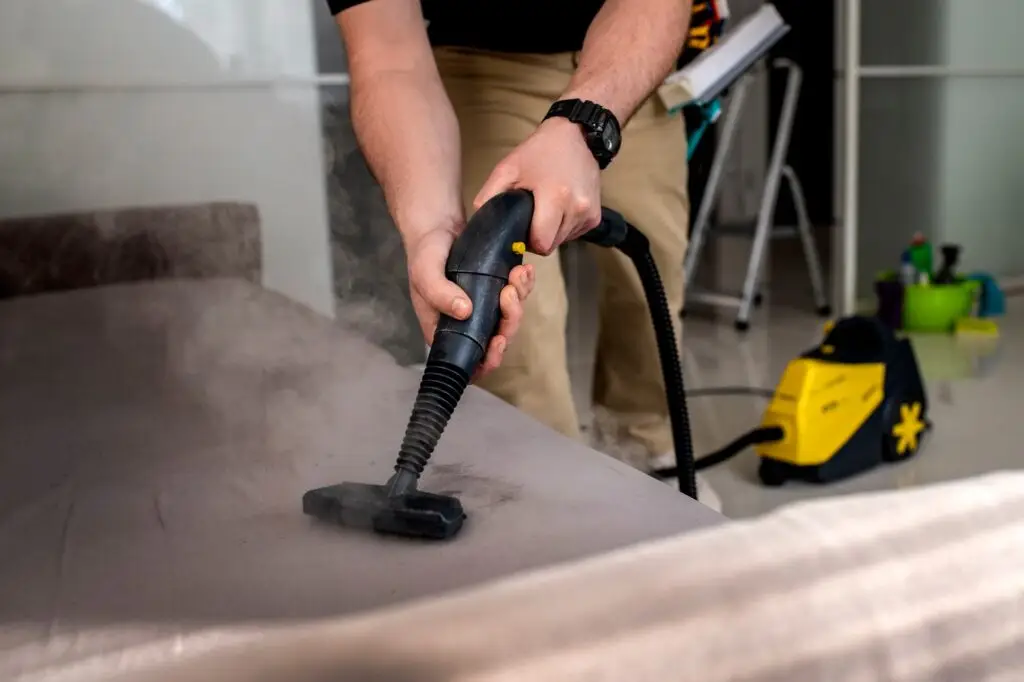
Chairs, sofas, panels, and fabric partitions take daily wear. Over time, dust, oils, and spills sink deep into the fibers. That is why a smart maintenance plan matters.
Upholstery cleaning helps you protect comfort and appearance, and it also supports hygiene goals. Just as important, it can reduce long-term replacement costs when you do it on a set schedule.
Why Professional Upholstery Cleaning Matters
Surface wipe-downs remove visible dirt, but they rarely remove what sits below the top layer. Professional Upholstery cleaning targets embedded soils that can dull color, flatten pile, and hold odors. As a result, the fabric looks better and performs better.
Also, professional teams work with tested methods, measured dilution, and controlled moisture. Therefore, you get predictable results and less risk of overwetting, shrinkage, or dye bleed.
Furniture cleaning vs. fabric care: what’s the difference?
Many people use “Furniture cleaning” as a broad label. However, different materials need different chemistry, tools, and dwell time. Upholstery cleaning focuses on fabric and padding systems, not just hard frames or legs.
In addition, trained technicians identify fiber type, construction, and likely stain sources before they start. That step changes the entire cleaning process, because a solution that works on one fabric can damage another.
- Fabric type: synthetic blends, natural fibers, performance fabrics
- Colorfastness: prevents fading and bleeding during Upholstery cleaning
- Soil type: dry particulate, body oils, food residue, ink, tannins
- Use pattern: high-touch arms and headrests need targeted passes
The cleaning process: steam cleaning and low-moisture options
A strong result starts with the right sequence. First, the team dry-vacuums to lift grit that can act like sandpaper. Next, they pre-treat spots and high-soil zones, because targeted chemistry reduces aggressive scrubbing.
Then they choose a method that fits the fabric and risk level. Steam cleaning (hot water extraction) can work well on many durable textiles. However, low-moisture encapsulation or controlled foam can be better for delicate weaves and faster dry times.
Finally, they rinse or extract to remove residues. That last step matters, because leftover detergent can attract new soil. Done correctly, Upholstery cleaning leaves fabric cleaner, softer, and more even in color.
If you want an industry benchmark for definitions and methods, the IICRC S300 standard is a helpful reference for what professional cleaning typically covers.
7 Benefits of professional cleaning you can measure
1. Longer fabric life and fewer replacements
Embedded grit cuts fibers every time someone sits down. Therefore, wear accelerates in the same 3 zones: seat center, arm tops, and headrest areas. Upholstery cleaning removes that abrasive soil, so the fabric holds up longer.
Over a year, that can mean fewer repairs and delayed replacement cycles. In other words, you protect the asset instead of just improving the look.
- Less fiber breakage from dry particulate
- Less permanent shading from body oils
- More consistent appearance across matching pieces
2. Better indoor hygiene and fewer odors
Soft surfaces can trap odors from food, moisture, and everyday use. Professional Upholstery cleaning lifts odor-causing residues rather than masking them. As a result, rooms feel fresher without heavy fragrance.
This matters in shared spaces where first impressions affect trust. It also matters in high-traffic areas where stale odors return fast if residues stay in place.
3. Improved appearance that supports your brand
Clean furniture signals care and professionalism. Even so, inconsistent spot cleaning can create rings and lighter patches. Upholstery cleaning evens out the fabric, reduces visible traffic lanes, and restores a more uniform finish.
That visual consistency helps lobbies, meeting rooms, and client-facing areas look maintained. Consequently, your space supports your brand message instead of distracting from it.
4. More effective stain management (and fewer callbacks)
Stains become harder to remove as they oxidize and bond with fibers. Therefore, fast response and correct chemistry matter. Upholstery cleaning performed by trained technicians improves the odds of full removal, especially for common spills like coffee, tea, and soft drinks.
Just as important, a documented approach reduces trial-and-error. That means fewer repeat visits and fewer “it came back” complaints.
- Better results on protein, tannin, and oil-based soils
- Lower risk of setting stains with heat or wrong pH
- More consistent outcomes across multiple furniture types
5. Faster drying and less disruption with the right method
Downtime is a real cost. However, professional teams can choose low-moisture methods when you need quick turnaround. They also use airflow planning and controlled application, which shortens dry time and reduces the risk of musty smells.
When you schedule Upholstery cleaning around occupancy, you protect productivity while still meeting cleanliness goals.
6. Safer results through controlled chemicals and technique
Misused products can leave residues, bleach dyes, or irritate sensitive users. Professional Upholstery cleaning uses measured dilution, fabric-appropriate agents, and rinse steps that reduce leftover chemistry. Therefore, you get a cleaner surface with fewer unintended side effects.
In addition, professionals manage moisture carefully. That helps prevent issues like browning, shrinkage, or adhesive weakening in certain upholstery constructions.
- Correct pH selection for fiber stability
- Controlled moisture to protect padding and backing
- Reduced residue that can attract rapid re-soiling
7. Clear documentation for routine maintenance planning
If you manage multiple rooms or sites, consistency matters. Upholstery cleaning done on a planned cycle creates measurable baselines: condition notes, high-wear zones, and stain trends. As a result, it becomes easier to forecast workload and budget.
Also, when cleaning services track methods used and outcomes, you can compare vendors and refine frequency. That turns cleaning from a reactive task into a manageable program.
Choosing cleaning services: questions that prevent surprises
Not all cleaning services deliver the same result, even when they use similar machines. Therefore, ask for process details, not just a price. A quality provider will explain fabric testing, moisture control, and the full cleaning process in plain language.
Before you approve Upholstery cleaning, confirm what is included and what is excluded. Also confirm realistic dry times, because those can vary based on method, fabric, humidity, and airflow.
- Which method will you use, and why (steam cleaning vs. low-moisture)?
- Do you pre-test for colorfastness and fiber type?
- Will you extract or rinse to reduce residue?
- What is the expected dry time in hours (for example, 2 to 8)?
- How do you handle high-risk fabrics and stubborn stains?
Simple ways to extend results between visits
Professional visits work best when daily care supports them. First, vacuum high-use upholstery 1 to 2 times per week, because dry soil causes most wear. Next, treat spills fast with blotting, not rubbing, so you avoid pushing liquid deeper.
Also, rotate cushions when possible and protect arms with washable covers in high-touch zones. Then schedule Upholstery cleaning on a frequency that matches use, not just the calendar.
The Fresh-Fabric Finish
When you want comfort, appearance, and longer asset life, Upholstery cleaning is a practical investment. It supports cleaner spaces, better-looking furniture, and fewer costly replacements, especially when you pair it with smart daily care and the right provider.
