
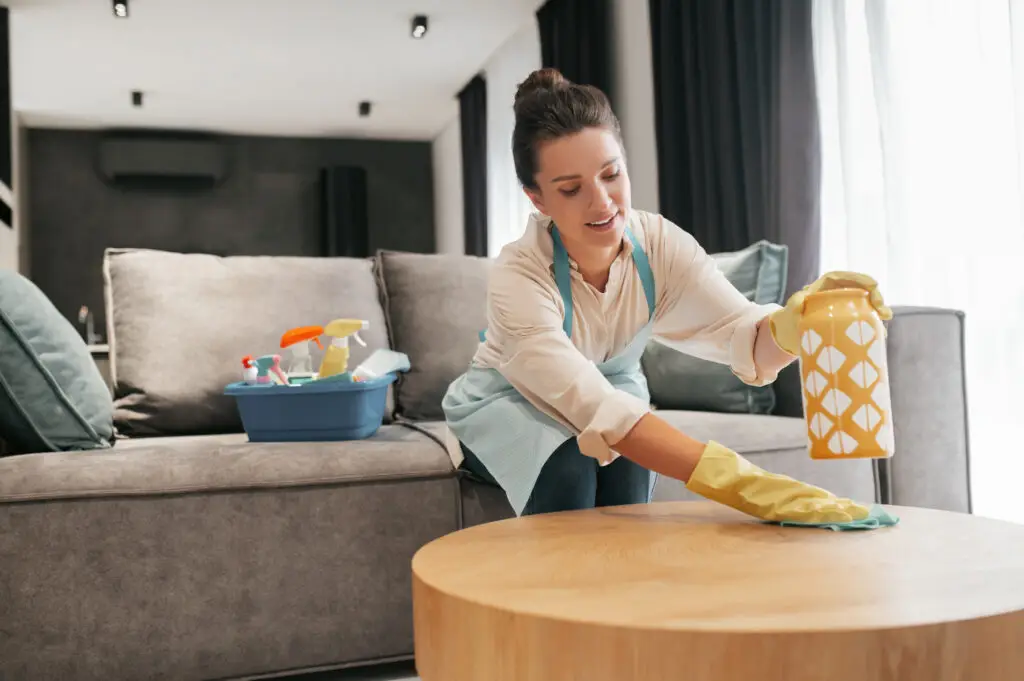
The living room is the hub of the home—the primary space for entertaining, relaxing, and gathering. Due to its high traffic and dense collection of textiles, electronics, and decorative items, it requires a stratified cleaning approach. This professional routine breaks down tasks into daily, weekly, and monthly intervals, ensuring your space remains both aesthetically pleasing and truly sanitary.
Why Living Room Cleaning Is Important
Unlike private spaces, the living room’s cleanliness impacts every member of the household and any guest who enters. Maintaining this area is crucial for health and hospitality.
High-Traffic Area That Collects Dust and Germs
The living room is a magnet for particles tracked in from outside, including dirt, pollen, and debris. Furthermore, upholstered furniture, rugs, and decorative items trap dust and allergens easily. When left uncleaned, this particulate matter contributes to poor indoor air quality, making it the most significant source of dust and germs in your home.
Keeps Your Home Inviting and Allergy-Free
A clean living room sets the standard for the entire house. A tidy, well-maintained space promotes relaxation and makes your home instantly welcoming. Regularly removing dust and vacuuming carpets and upholstery significantly reduces household allergens like dust mites and pet dander, offering relief to allergy sufferers.
Daily & Weekly Cleaning Routine
Consistency in these tasks prevents small messes from escalating into overwhelming clutter and grime.
Weekly: Dust Shelves, Tables, and Electronics
Dusting should be performed weekly, moving systematically from the top of the room down to the floor. Use a slightly dampened microfiber cloth, which traps dust rather than spreading it into the air.
- High Surfaces: Start with ceiling fans, light fixtures, and the tops of tall bookcases.
- Electronics: Gently wipe flat-screen televisions, monitors, game consoles, and stereo equipment. Pay special attention to cable organization, as wires trap significant amounts of dust.
- Surfaces: Clean coffee tables, end tables, and shelves, ensuring that all decorative items are lifted, dusted, and replaced.
Weekly: Vacuum Rugs and Upholstery Regularly
Vacuuming removes the deep-seated dirt that dusting pushes onto the floor.
- Rugs and Carpets: Vacuum all rugs and wall-to-wall carpeting at least once a week, making two slow passes over high-traffic areas.
- Upholstery: Use the upholstery attachment on your vacuum cleaner to go over the surface of sofas, chairs, and cushions. This removes crumbs, hair, and dust before they become embedded in the fabric fibers. Ensure you also lift the cushions and vacuum the sofa deck underneath.
Monthly Deep Cleaning Tasks
These tasks tackle the less obvious areas and major textiles that require periodic attention to maintain freshness.
Wash Curtains, Clean Ceiling Fans, and Baseboards
Dedicate a day each month to these high-impact deep cleaning tasks:
- Window Treatments: Vacuum drapes thoroughly with a brush attachment or, if machine-washable, remove and launder curtains according to the care label.
- Ceiling Fans: Place an old pillowcase over each blade, then gently pull it back. This traps all the dust inside the pillowcase rather than dropping it onto the furniture and floor below. Wipe the fan motor housing.
- Baseboards: Dust and wipe down all baseboards, which are prone to collecting dust and scuff marks, drastically improving the room’s overall appearance.
Spot Clean Sofas and Pillows
Check upholstered items for spills, dirt, or pet marks that may have accumulated over the month.
- Fabric Upholstery: Use a specialized upholstery stain remover or a mixture of mild dish soap and water on a clean cloth. Always check the care code tag (W for water-based, S for solvent-based) first. Blot the stained area gently, then use a damp cloth to rinse the soap residue.
- Pillows: If pillow inserts are washable, launder them to remove odors and restore fluffiness. Wash or dry-clean removable cushion covers as needed.
Pro Tips for an Organized Living Room
A professional cleaning routine must also address the perpetual challenge of organization to prevent clutter buildup.
Declutter Surfaces Weekly
Clutter is dust’s best friend. The more items you have on a surface, the harder it is to clean, and the more dust they accumulate.
- The “Five-Minute Sweep”: Before your weekly cleaning session, dedicate five minutes to removing all non-living room items (e.g., mail, shoes, dishes, toys) and returning them to their designated room.
Use Baskets for Remote Controls and Accessories
The easiest way to control small, necessary items is through designated containment.
- Remote Caddy: Use a stylish basket, decorative box, or remote caddy on the coffee table or end table to corral all remote controls.
- Reading Material: Keep magazines and reading material neatly stacked in a decorative wire basket or magazine holder instead of letting them spread across the floor or table.
FAQs
How often should I deep clean my living room?
A full, intensive deep clean (which includes moving large furniture, cleaning windows inside and out, and professionally cleaning rugs and carpets) is recommended twice per year (semi-annually). This is necessary to address deep-seated dirt beneath furniture and in heavy textiles.
What’s the best cleaner for leather furniture?
Leather requires gentle, specialized care to prevent drying, cracking, and damage to the finish.
- Routine Cleaning: Use a simple solution of equal parts distilled white vinegar and water on a soft cloth to gently wipe down the leather surface.
- Conditioning: After cleaning (and especially every 6-12 months), use a dedicated leather conditioner to replenish the natural oils and maintain the material’s softness and longevity. Always test any new cleaner or conditioner on an inconspicuous area first.
