
Mold growth is a common problem in humid environments, particularly in homes located in damper climates. While bleach is often the go-to solution, it only addresses the surface stain and does not fully penetrate porous materials. Borax, a naturally occurring mineral compound, offers a powerful, non-toxic alternative that kills mold spores and inhibits future growth.
Why Borax Works Against Mold
Borax, chemically known as sodium tetraborate, is a staple in many US laundry rooms and cleaning caddies for good reason. It offers robust cleaning power while being gentler than chlorine bleach.
Natural, Non-Toxic, and Antifungal Properties
Borax works by attacking the mold on a cellular level. It is a natural fungicide and insecticide, meaning it effectively kills both the mold spores and the root structure (hyphae) without releasing toxic fumes that are common with harsh commercial cleaners. When used correctly, it is generally considered safe for household use, though it must never be ingested and should always be kept out of reach of children and pets.
Ideal for Bathrooms, Walls, and Grout
Because Borax has a high pH (it is alkaline), it creates an environment that mold cannot tolerate, effectively disrupting the mold’s ability to reproduce. It is particularly effective on porous surfaces where mold roots deeply, such as:
- Painted and Drywall Surfaces: Unlike bleach, Borax does not damage paint and leaves a residual barrier.
- Tile and Grout: Its abrasive powder structure, when mixed with water, aids in scrubbing mold and mildew from porous grout lines.
- Wood Surfaces: It can be used on wooden frames or subfloors to kill mold without corroding the material.
What You’ll Need
Before starting the cleaning process, gather these items to ensure a smooth and safe procedure.
Borax, Warm Water, Spray Bottle, Scrub Brush
- Borax Powder: Purchase pure Borax detergent booster (often found in the laundry aisle of grocery stores).
- Warm Water: Warm water helps the Borax crystals dissolve more readily than cold water.
- Spray Bottle or Bucket: A spray bottle is ideal for treating vertical surfaces, while a bucket is needed for mixing larger quantities.
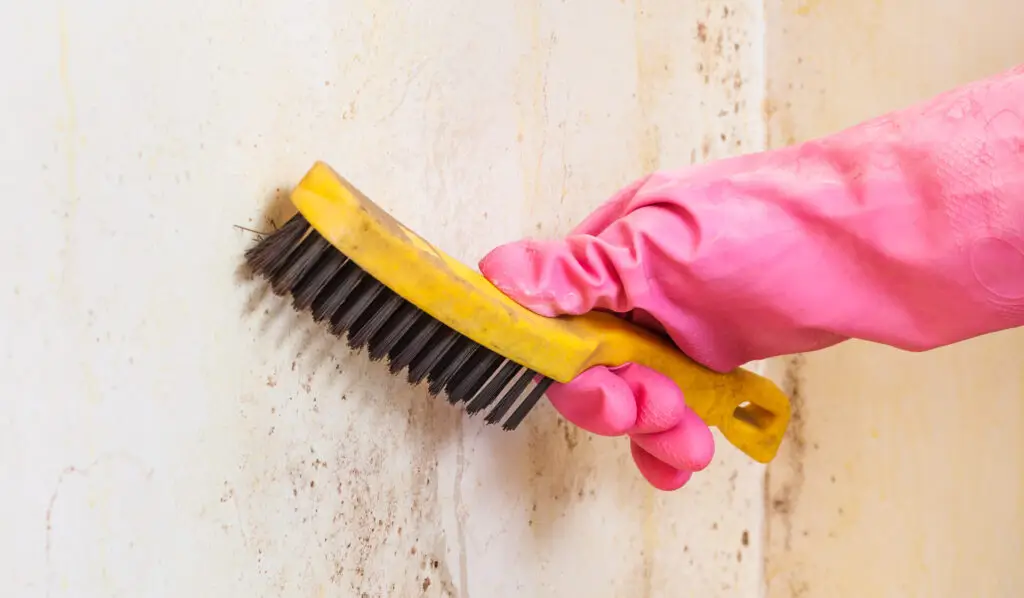
- Scrub Brush or Old Toothbrush: You’ll need something stiff to agitate and break up the mold growth on the affected surfaces.
Step-by-Step Mold Removal with Borax
Follow these steps precisely to maximize Borax’s antifungal power and ensure complete mold removal.
Mix One Cup of Borax Per Gallon of Water
In your bucket or large container, combine 1 cup of Borax powder with 1 gallon of warm water. Stir the mixture thoroughly until the Borax is fully dissolved. If you are using a spray bottle, fill the bottle with the solution. For minor, localized mold, you can use a stronger concentration, such as 2 tablespoons of Borax per 2 cups of water.
Apply Solution and Scrub Affected Areas
Pour the Borax mixture directly onto the moldy area or saturate the area using the spray bottle. Allow the solution to sit for 10 minutes to penetrate the mold spores. Use your scrub brush or sponge to aggressively scrub the visible mold and mildew from the surface. For deep-seated mold in grout, a stiff-bristled brush is necessary.
Leave a Light Residue to Prevent Regrowth
Crucially, do not rinse the Borax solution off the surface after scrubbing. After cleaning the surface, wipe away any standing liquid or debris, but leave a thin layer of the Borax solution on the cleaned area. As the solution dries, the residual Borax powder acts as a natural inhibitor, discouraging the return of mold spores. If you rinse it off, you lose this protective, long-term defense.
Safety Tips
Handling mold and cleaning agents requires basic precautions to protect your health.
Wear Gloves and Proper Ventilation
Mold spores can be harmful if inhaled, and direct skin contact with Borax can cause mild irritation in some people. Always wear the following:
- Gloves: Use waterproof rubber gloves to protect your hands.
- Mask: Wear an N95 mask or a similar respirator to prevent inhaling airborne mold spores during the scrubbing process.
- Ventilation: Open nearby windows and use a fan to create air movement and draw air out of the room, preventing spores from circulating into other parts of the house.
Avoid Mixing Borax with Vinegar or Bleach
While Borax is generally safe, never mix it with other strong cleaning agents. Combining Borax with common household cleaners like vinegar or bleach can create chemical reactions that are unsafe and negate the effectiveness of the Borax. Treat the area only with the Borax and water solution. If you’ve previously used bleach, ensure the area is completely dry before applying Borax.
FAQs
Can borax remove black mold?
Yes, Borax can effectively kill and remove common household molds, including the notorious Stachybotrys chartarum, often referred to as “black mold.” However, it is important to remember that the size of the contaminated area dictates the proper removal method. If the black mold covers an area larger than 10 square feet, or if you suspect it is embedded deep within structural materials (like ceiling joists or insulation), it is highly recommended to consult with a professional mold remediation specialist.
Is borax safe for painted walls?
Borax, when mixed in the recommended dilution with water, is generally safe for use on most painted walls and other hard surfaces. Because Borax is not acidic, it will not strip or damage paint finishes the way highly acidic cleaners might. However, always test the solution on an inconspicuous area first (like behind a piece of furniture) to ensure it does not cause discoloration or cloudiness on your specific wall paint.
