
Natural stone floors in a shower, whether they are elegant marble, rustic travertine, or sophisticated slate, bring a touch of luxury and organic beauty to any bathroom. However, unlike ceramic or porcelain, natural stone is a porous material with unique vulnerabilities that demand special care. Improper cleaning can lead to etching, staining, and permanent damage. Quality Cleaning Services understands the delicate nature of natural stone and provides expert care to ensure your shower floor remains beautiful and pristine.
Cleaning a natural stone floor in your shower requires a gentle touch and specific products to preserve its integrity and beauty. With the right routine, you can prevent damage and maintain its luxurious appearance.
Why stone requires special care
Natural stone, formed over millions of years, possesses inherent characteristics that make it distinct from manufactured tiles and highly sensitive to certain cleaning agents and environmental factors:
- Porosity: Stone is naturally porous, meaning it has tiny capillaries and pores that can absorb liquids. This makes it susceptible to staining from soap scum, body oils, and hard water minerals. If not properly sealed, it can also absorb water, promoting mold and mildew growth beneath the surface.
- Acid Sensitivity: Many common natural stones, particularly those with a calcium carbonate base like marble, travertine, and limestone, are highly reactive to acids. Even mild acids (like vinegar, lemon juice, or many standard bathroom cleaners) can etch the surface, causing dull spots, rough patches, and irreversible damage to the stone’s finish.
- Mineral Composition: Different types of stone have varying mineral compositions, influencing their hardness and sensitivity. For instance, granite is generally harder and less porous than marble, but it can still be damaged by strong acids or harsh abrasives.
- Grout Lines: While the stone itself is the primary concern, the grout lines between stone tiles are also porous and prone to collecting dirt and mold, requiring careful cleaning that doesn’t harm the adjacent stone.
- Soap Scum & Hard Water: The constant exposure to soap scum, body oils, and mineral-rich hard water in a shower environment creates a challenging cleaning scenario for porous stone, increasing the risk of unsightly buildup and stains.
Best cleaners for natural stone
Given stone’s sensitivities, choosing the right cleaner is paramount. You need products that effectively clean without causing etching or damage.
- pH-Neutral Stone Cleaners (Daily Use): These are specifically formulated for natural stone. They are balanced to neither acidic nor alkaline, making them safe for daily or weekly cleaning. Many come as concentrated formulas that you dilute with water.
- Mild Dish Soap (Occasional Use): For light cleaning, a few drops of mild, pH-neutral dish soap (like clear Dawn or Ivory) mixed with warm water can be used. However, use sparingly, as dish soap can leave a film over time if not rinsed thoroughly, which can attract dirt and dull the stone’s luster.
- Hydrogen Peroxide (for Mold/Mildew on Light-Colored Stone): For mold or mildew stains on light-colored stone (like white marble), a 3% hydrogen peroxide solution can be effective.
- Method: Create a poultice by mixing hydrogen peroxide with baking soda to form a thick paste. Apply to the stain, cover with plastic wrap, and tape down. Let it sit for 12-24 hours. Remove, rinse thoroughly, and dry. Test on an inconspicuous area first.
- Stone-Specific Poultices (for Deep Stains): For deep-set stains (e.g., rust, oil), you may need a commercial stone poultice specifically designed for the type of stain and your stone. These draw the stain out of the porous stone.
Always Check the Label: No matter the product, always verify it’s explicitly labeled “safe for natural stone,” “pH-neutral,” or “stone-friendly.”
Avoiding damage from acidic products
This is arguably the most critical rule for cleaning natural stone in a shower. Acidic products will etch and dull the stone’s surface, creating permanent damage that often requires professional refinishing to correct.
Absolutely AVOID these common household cleaners and substances on natural stone:
- Vinegar: Highly acidic. Will etch marble, travertine, limestone, and even some granites.
- Lemon Juice or other Citrus-based Cleaners: Contains citric acid, which is highly corrosive to stone.
- Strong Bathroom Cleaners: Most conventional bathroom cleaners for soap scum or mildew contain acids (e.g., phosphoric acid, hydrochloric acid, glycolic acid) or harsh alkalis. These are destructive to stone.
- Bleach: While bleach won’t typically etch stone, it can strip sealers, discolor some types of stone (especially darker ones), and damage grout. Use with extreme caution and only if desperate for mildew, and rinse immediately. Hydrogen peroxide is a safer alternative for mold.
- Abrasive Cleaners: Powders, scouring pads (like steel wool or Scotch-Brite green pads), or stiff brushes can scratch and dull the polished surface of stone. Always use soft cloths, sponges, or very soft-bristle brushes.
- Grout Cleaners (Unless Stone-Safe): Many grout cleaners are acidic to dissolve hard water and soap scum. Ensure any grout cleaner you use specifically states it is safe for natural stone.
How to Identify Damage: Etching appears as a dull, lighter-colored spot or streak on polished stone, or a darker, slightly rougher patch on honed stone. It looks like the finish has been “eaten away.”
Weekly and monthly cleaning routines
A consistent, gentle cleaning routine is the best defense against buildup and damage on your stone shower floor.
Daily maintenance (after each shower)
- Rinse Thoroughly: After showering, thoroughly rinse the entire stone floor (and walls, if stone) with clean water to wash away soap scum and body oil residue.
- Squeegee/Wipe Down: Use a rubber squeegee on smooth stone surfaces or a clean, dry microfiber cloth to wipe down the floor. This removes standing water and helps prevent hard water spots and soap scum buildup.
- Ventilation: Always run the exhaust fan for at least 15-20 minutes after showering, or open a window, to remove humidity and allow the stone to dry completely.
Weekly cleaning
- Vacuum/Sweep Loose Debris: Before wet cleaning, vacuum or sweep up any loose hair, dust, or grit to prevent scratching the stone during scrubbing.
- Apply pH-Neutral Stone Cleaner: Dilute your chosen pH-neutral stone cleaner according to manufacturer instructions.
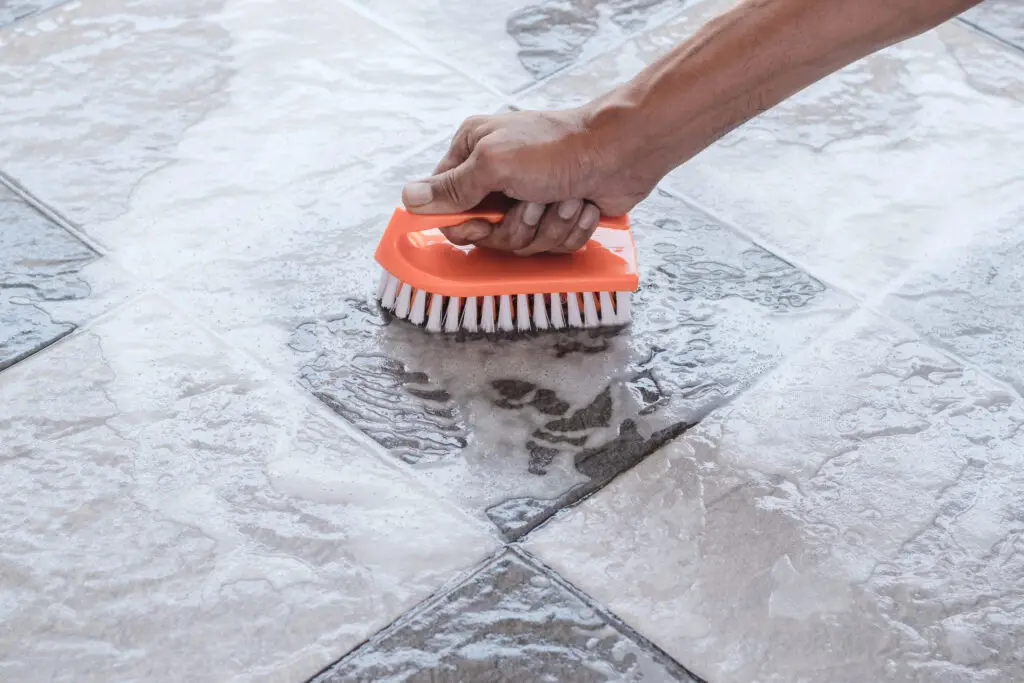
- Gentle Scrub: Apply the cleaner to the stone floor. Using a soft-bristle brush (like a standard scrub brush for floors, but with soft bristles) or a soft sponge, gently scrub the entire floor, focusing on grout lines and textured areas.
- Rinse Thoroughly: This is crucial. Rinse the floor repeatedly with clean, plain water to remove all cleaning solution residue. Remaining residue can attract dirt or leave streaks.
- Dry Completely: Use a clean, dry towel to wipe down the floor, or run a fan to ensure it dries fully to prevent water spots and inhibit mold growth.
Monthly deep cleaning (or as needed)
- Address Grout: If grout lines are discolored, use a pH-neutral stone-safe grout cleaner or a paste of baking soda and water. Apply, gently scrub with a soft grout brush, and rinse thoroughly.
- Poultice for Stains: If you have stubborn stains, apply a stone-specific poultice as directed for the type of stain.
- Inspect Sealer: Perform a “water test” (see below) to check the integrity of your stone’s sealer. This is also a good time to consider re-sealing if needed.
Sealing stone to prevent mold and stains
Sealing is the single most important preventative measure for natural stone in a shower. It doesn’t make stone waterproof, but it significantly reduces its absorbency.
- Why Seal?
- Stain Prevention: A good quality penetrating sealer fills the microscopic pores of the stone, creating a barrier that repels water, oils, and other liquids. This gives you more time to wipe up spills before they can penetrate and cause stains (e.g., from soap scum, body oils, hard water).
- Mold/Mildew Inhibition: By reducing water absorption, a sealer makes it much harder for mold and mildew to take root within the stone itself. (Mold can still grow on the surface if not cleaned, but it’s easier to remove).
- Easier Cleaning: Sealed stone is much easier to clean because grime has less ability to cling to or penetrate the surface.
- How Often to Seal: The frequency depends on the stone type (some are more porous than others), the type of sealer used, and shower usage.
- General Guideline: Shower stone floors typically need to be re-sealed every 6 months to 1 year. Very porous stones (like some travertines or limestones) may need it more often. Denser stones (like granite) might last longer.
- How to Test Your Sealer:
- Drop a few droplets of water (about the size of a dime) onto a clean, dry section of the stone.
- Wait 5-10 minutes.
- If the water beads up on the surface, your sealer is still working effectively.
- If the water begins to soak into the stone and creates a dark spot, it’s time to re-seal.
- Applying Sealer:
- Clean and Dry: Ensure the stone is immaculately clean and completely dry before applying sealer. Any dirt or moisture will be sealed in.
- Use a Penetrating Sealer: Choose a high-quality penetrating (impregnating) stone sealer. These absorb into the stone’s pores without forming a topical layer that can peel or chip.
- Follow Instructions: Apply the sealer according to the manufacturer’s specific instructions, typically using a clean, lint-free cloth or applicator pad. Apply thin, even coats.
- Wipe Off Excess: It’s crucial to wipe off all excess sealer before it dries. Dried excess sealer can leave a hazy film on the surface.
- Cure Time: Allow the sealer to cure for the recommended time (often 24-72 hours) before using the shower.
- Professional Sealing: For optimal results and peace of mind, especially with large or intricate stone installations, consider having Quality Cleaning Services apply a professional-grade sealer. We have access to superior products and expertise to ensure proper application and long-lasting protection.
Caring for your natural stone shower floor is an investment in its lasting beauty. By understanding its unique properties, using safe cleaning methods, and consistently sealing, you can enjoy a pristine and luxurious shower experience for years to come. For expert stone cleaning and sealing, trust Quality Cleaning Services to protect your beautiful natural surfaces.
