
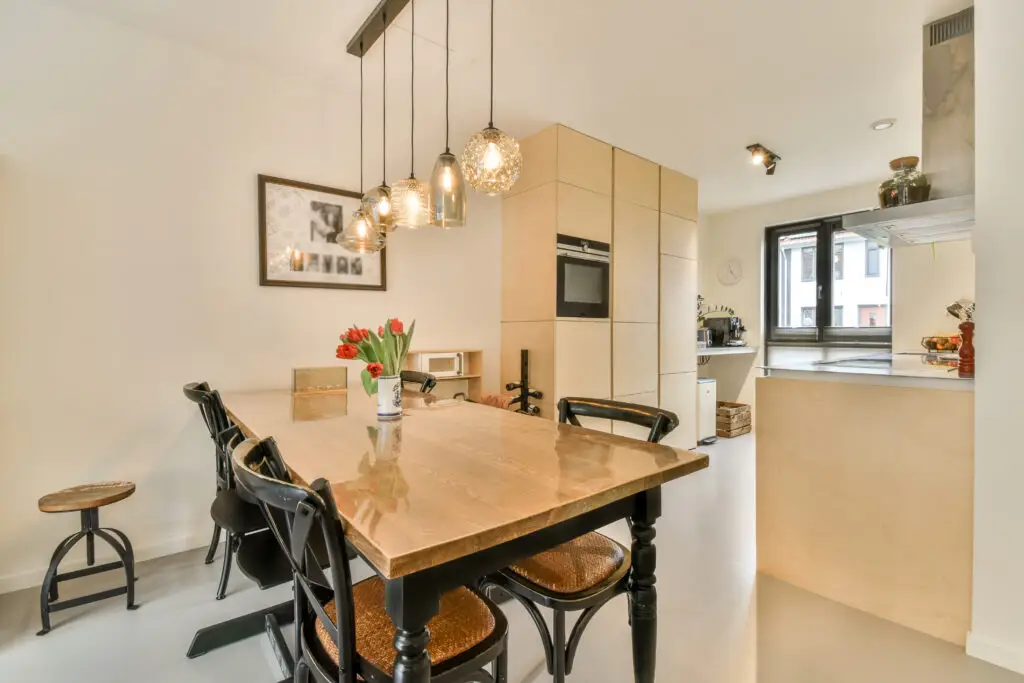
Sharing a living and dining area in a small space is one of the more common home challenges. The room needs to function for two different purposes at the same time, and without a clear plan, it quickly feels cluttered and cramped.
The good news is that this is a very solvable problem. You do not need a renovation or expensive furniture. You need a strategy: clear zones, the right pieces, and a few design principles that make the space feel larger and more organized than it actually is.
Quick answer
How do you organize a small living and dining room?
- Define two distinct zones using rugs, furniture placement, or lighting.
- Choose multi-functional furniture that serves more than one purpose.
- Use vertical space with floor-to-ceiling shelving and wall-mounted storage.
- Keep only what you use regularly. Declutter aggressively.
- Apply light colors and mirrors to visually expand the space.
- Maintain clear pathways of at least 36 inches between furniture pieces.
- Keep surfaces clean and uncluttered as a daily habit.
Why small combined rooms need a specific approach
A single-function room has a clear purpose. A combined living and dining room has two, and they can compete with each other if the layout is not intentional.
The living area needs comfort, soft surfaces, and space to relax. The dining area needs a table, clearance to pull chairs out, and a surface that can handle food. Without clear zoning, these two functions bleed into each other and the room ends up feeling like neither one.
Professional organizers who work in smaller homes see this pattern frequently: a dining table pushed against the wall with coats draped over the chairs, a sofa positioned to avoid the table rather than face the room, and both surfaces collecting the overflow of the other space. The room looks busy but does not work for either purpose.
The Harvard Joint Center for Housing Studies notes that homes in the U.S. are increasingly built or adapted for smaller square footage, which means more households are managing combined-function spaces. The response from designers is consistent: zoning, multi-functionality, and vertical storage are the three foundations of small-space organization.
Step 1: Define your two zones clearly
Before any furniture moves, decide where the living zone ends and the dining zone begins. This boundary does not need a wall. It just needs to be visible and consistent.
The most effective zone markers are:
Area rugs: Place one rug under the sofa and seating area, and a separate rug under the dining table. The rugs do not need to match, but they should coordinate. Each rug anchors its zone and creates a visual separation that reads clearly from anywhere in the room.
Furniture orientation: The back of a sofa or a narrow console table can act as a soft divider between zones. Orienting the sofa slightly toward the dining area (rather than completely away from it) helps the two zones feel connected without merging.
Lighting: A pendant light or a low chandelier directly above the dining table defines the dining zone even in an open-plan layout. In the living area, a floor lamp near the sofa reinforces that zone’s identity. Different light sources for different zones make each one feel purposeful.
Consistent clearance: Leave at least 36 inches of walkway between the dining chairs and the sofa. This allows movement between zones without the furniture feeling jammed together.
Step 2: Choose furniture that earns its place
In a small combined room, every piece of furniture needs to justify its footprint. The question to ask for each item is: does this serve at least two purposes, or does it earn its place through the specific function it performs here?
Dining table options for small spaces:
- Drop-leaf tables fold down on one or both sides, dramatically reducing the footprint when not in use.
- Round tables are more space-efficient than rectangular ones because they allow more movement around the edges.
- Extendable tables with a compact default size handle daily use efficiently and expand when needed.
- A wall-mounted fold-down table is the most space-efficient option for very tight rooms.
Seating that works harder:
- Dining benches tuck fully under the table when not in use, freeing floor space and visual space at the same time.
- Nesting chairs or stools that stack or nest eliminate the footprint problem between uses.
- An ottoman in the living area that functions as a coffee table, extra seating, and hidden storage is one of the highest-value pieces in any small combined room.
Sofa and seating scale:
The sofa should fit the room, not the other way around. A large sectional in a small combined space almost always makes both zones feel smaller and harder to navigate. A compact two or three-seater with clean lines reads lighter and leaves more visual and physical space for the dining area.
Step 3: Use vertical space
Small rooms rarely use their full height. The floor space is limited, but the walls and the height of the room are often completely unused. This is one of the fastest ways to add functional storage without expanding the footprint.
Floor-to-ceiling shelving: A tall bookcase or built-in shelving unit draws the eye upward, making the room feel taller. It provides significant storage for books, plants, and decorative objects, and can include closed lower sections for items that do not need to be visible.
Floating shelves: Wall-mounted shelves above the dining area or along the side wall add storage without any floor contact. Use them for glassware, plants, framed photos, or small baskets that hold everyday items.
Wall-mounted storage near the dining area: Hooks or small wall cabinets near the dining zone can hold place mats, candles, or small serving items, keeping the table surface clear between meals.
High cabinets over low furniture: A sideboard or console table with a floating shelf or cabinet above it doubles the storage value of that wall without increasing the room’s visual weight.
Step 4: Declutter before you organize the small living and dining room
The most carefully designed small room still feels cramped if it holds too much. Decluttering is not a one-time event. It is an ongoing practice that keeps the space functioning.
Walk through both zones and ask of each item: does this need to be here, or has it drifted in from somewhere else?
Common clutter sources in combined living and dining rooms:
- Decorative items that accumulated over time but no longer reflect a deliberate choice
- Mail, bags, chargers, and daily-use items that have no clear storage home
- Extra chairs or seating pieces that are rarely used but take up permanent floor space
- Dining surfaces used as catch-all counters between meals
- Coffee tables or ottomans covered in items that belong in other rooms
When every item in the room has a designated place, the space stays organized without effort. If something does not have a place, either create one or remove the item.
If the room needs a full reset, pairing decluttering with a thorough clean is the most efficient approach. A residential cleaning service can handle the deep clean while you focus on decisions about what stays and what goes.
Step 5: Use design principles that expand the space visually
The physical dimensions of the room are fixed. The perceived size is not. These design techniques consistently make small rooms feel more open.
Light colors on walls and large surfaces: Pale neutrals, whites, and soft warm tones reflect light and push the walls visually outward. Dark colors absorb light and compress the perceived space. This applies to walls, large furniture pieces, and area rugs.
Mirrors: A large mirror on one wall reflects both light and the room itself, creating the impression of depth. Position it opposite a window to maximize the effect. Even a mid-sized mirror above a console or sideboard adds perceptible depth to a small room.
Consistent flooring: If both zones share the same floor material, which they typically do in a combined room, the continuity makes the space read as larger. Avoid using area rugs that clash with or visually interrupt the floor rather than complementing it.
Furniture with legs: Sofas, chairs, and tables raised on legs reveal the floor beneath them, making the room feel less heavy and more open than pieces that sit directly on the floor. The visual continuity of the floor under the furniture creates a sense of more space.
Limiting the number of patterns: One or two coordinated patterns in the room are easier to read than multiple competing ones. In a small space, visual noise from pattern overload makes the room feel more crowded than it is.
Step 6: Maintain the organization
A well-organized small room requires more maintenance consistency than a larger room, because there is less margin for clutter to accumulate before it affects function.
Two habits make the biggest difference:
Daily reset: Spend five minutes at the end of each day returning items to their designated places. Clear the dining table, replace anything that drifted from one zone to the other, and straighten the living area seating. When everything has a clear home, this takes almost no effort.
Seasonal reassessment: Every few months, walk through both zones and check whether the organization still matches how you use the room. Habits change. Storage needs shift. A small adjustment to the layout or storage plan is much easier than a full reorganization later.
For homes where consistent tidiness is difficult to maintain, scheduling a regular professional organizing service session is a practical way to keep the system working without the daily effort falling entirely on the household.
Common mistakes when organizing a small living and dining room
These are the errors that consistently make small combined rooms feel more difficult to use:
- Oversized furniture: A sofa or dining table that is too large for the zone makes both areas feel cramped and limits movement.
- No defined zones: Without clear boundaries, the two functions compete and both feel less functional.
- Ignoring vertical space: Relying only on floor-level storage in a small room wastes the most available resource.
- Too many decorative items: Each piece takes up visual space. In a small room, less is always more.
- Blocking natural light: Positioning tall furniture in front of windows reduces the light that makes small rooms feel larger.
- Using the dining table as general storage: A cluttered dining table makes the dining zone unusable and the whole room feel disorganized.
- Choosing furniture that matches in scale rather than function: A full-size dining set and a large sofa may coordinate visually, but if both are too large for the space, the coordination does not help.
Signs your small living and dining room needs reorganizing
Watch for these indicators that the current layout is not working:
- You consistently avoid using one of the two zones because it feels awkward
- The dining table is never fully clear for a meal
- Movement through the room feels restricted or requires navigating around furniture
- Surfaces collect clutter within hours of being cleared
- The room feels visually busy regardless of how clean it is
- Guests instinctively avoid sitting in certain areas
Any of these signals point to a layout or storage issue, not just a cleaning issue. The fix is usually a zone adjustment, a furniture change, or a declutter, not more organization products.
Frequently asked questions
How do you separate a living room and dining room without a wall? Use area rugs, lighting, and furniture orientation. A rug under the sofa and a separate rug under the dining table create distinct visual zones. A pendant light above the dining table and a floor lamp near the sofa reinforce each zone’s identity without any physical barrier.
What is the best furniture for a small combined living and dining room? Multi-functional pieces work best: a drop-leaf or extendable dining table, benches that tuck fully under the table, a sofa scaled to the room rather than a large sectional, and an ottoman that serves as a coffee table and storage. Each piece should serve more than one purpose or take up as little space as possible.
How much space do you need between dining chairs and the sofa? At least 36 inches of clear walkway between the two zones allows comfortable movement. If the room is very tight, a minimum of 30 inches is workable but limits flow. Clearance around the dining table itself should also be at least 36 inches on the sides where chairs need to pull out.
What colors make a small living and dining room feel bigger? Light, neutral tones on walls and large furniture surfaces, such as white, off-white, warm beige, and soft gray, reflect light and make the room feel more open. Consistent flooring and coordinated rugs also contribute to a sense of spaciousness.
How do you add storage to a small combined room? Use vertical space. Floor-to-ceiling shelving, floating wall shelves, wall-mounted cabinets, and furniture with built-in storage (ottomans, benches, sideboards) all add capacity without increasing floor footprint. Closed storage keeps surfaces visually clear.
Should a combined living and dining room have two rugs? Yes, in most cases. Two coordinated rugs, one anchoring the seating area and one defining the dining zone, help distinguish the two areas and make the layout feel intentional. They do not need to match, but they should work together in color and scale.
How often should you reassess the layout of a small combined room? Every three to six months is a good rhythm for most households. Needs change, and a small adjustment to furniture placement or storage can significantly improve how the room functions.
A small room that works for both living and dining
Organizing a small living and dining room is less about maximizing storage products and more about making deliberate choices: clear zones, furniture that earns its place, vertical storage, and consistent habits.
The room does not need to be large to feel functional and comfortable. It needs to be intentional. When the layout matches how you actually use the space and every item has a designated place, even a compact combined room can feel open, calm, and easy to maintain.
If you want professional help setting up a system that works for your specific space, our professional organizing service serves homeowners across Nantucket, Cape Cod, and Martha’s Vineyard.
